How Long Should a Ballet Barre Be? The Professional Sizing Guide
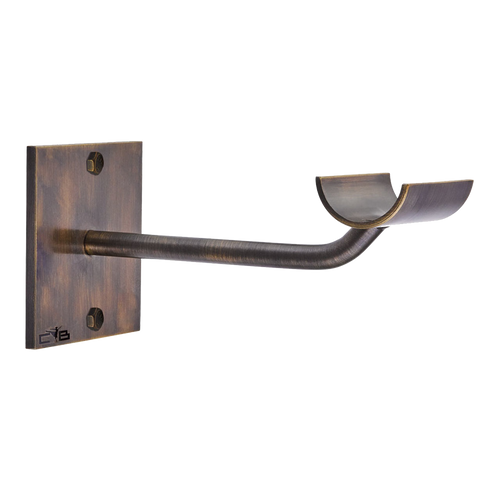
A standard ballet barre runs 6 to 12 feet per section. Commercial studios most often order 8-foot and 12-foot runs. To size your room, plan for at least 3 feet of barre per student — a 12-student class needs 36 linear feet minimum.
Getting the length right is the most important barre decision you will make. Too short and the room feels crowded. Too long and you are paying for footage that blocks doors or dead-ends at a corner. The right answer depends on your wall, your class size, and how you teach.
Standard Ballet Barre Lengths
Custom Barres can build any length to order, but these are the most commonly requested runs:
- 3–4 feet: Home studios, corner installations, or short accent walls. Comfortable for 1 student.
- 6 feet: Entry-level studio or residential use. Fits 2 students comfortably.
- 8 feet: The most popular commercial length — fits 2–3 students with good spacing.
- 10 feet: Mid-size studio walls or double installations. Fits 3 students.
- 12 feet: Full-length commercial run. Fits 4 students at professional spacing.
- Custom 13–20+ feet: Long teaching walls, school gyms, or multi-studio facilities. Built to order.
How to Calculate the Right Length for Your Space
The two-step calculation that professional studio designers use:
- Step 1 — Decide class capacity: How many students do you want to accommodate at the barre at once? This is your target enrollment per class, not the maximum you could ever fit.
- Step 2 — Multiply by 3: Allow 3 feet of barre space per student. A 10-student class = 30 linear feet. An 18-student class = 54 linear feet.
- Step 3 — Subtract obstacles: Deduct for doors, windows, outlets, and corners. Wall runs should end at least 6 inches from any obstruction.
- Step 4 — Plan the walls: Distribute footage across 2–3 walls rather than one overcrowded run. Multiple shorter runs feel more professional and give students better spacing.
For schools and commercial studios, we recommend calculating your capacity target first, then designing the barre layout around that number — not the other way around.
Wall-to-Wall vs. Section Approach
You have two basic strategies for filling a wall:
- Wall-to-wall single run: One continuous barre from corner to corner. Clean look but harder to install and repair. Best for purpose-built dance rooms.
- Multiple sections with gaps: Two or three sections separated by 6–12 inch gaps. Easier to ship, install, and replace. Works for multi-use rooms.
- L-shape corner runs: Sections that turn a corner on bracket mounts. Maximizes footage in small or square rooms.
- Double barre on same wall: Two heights (typically 38" and 42") stacked on the same wall. Doubles your capacity per linear foot of wall.
How Wall Length Affects Your Decision
Measure your available wall space carefully before ordering. Key rules:
- Leave 4–6 inches of clearance from corners and door frames on each end.
- On walls shorter than 8 feet, a single 6-foot run centered on the wall often looks better than a full-wall run.
- On walls longer than 16 feet, use two sections with a planned gap rather than one very long run.
- If you have mirrors, the barre run typically matches or is slightly shorter than the mirror width.
Special Situations: Schools, Rehab, and Hotels
- Dance schools (K-12): Children and adults will share the barre. A double barre at 32" and 38" height serves both age groups without compromise.
- Physical therapy and rehab: ADA-compatible barres run 60" minimum along a treatment wall. Grab-bar height (33–36") is the right range for rehab applications.
- Hotel fitness centers: 8–10 foot runs are typical for hotel gym applications. Stainless steel or satin nickel bracket finishes work best with modern hotel interiors.
- Home studios: A single 6-foot or 8-foot wall mounted run is usually enough for a serious home dancer. Freestanding portable options work when wall mounting is not possible.
Next Steps
Once you know your target class size and available wall footage, the quote process is straightforward. Custom Barres builds every run to order, so there is no need to compromise on length.
- Browse wall mounted, floor mounted, and portable options at Custom Barres.
- Get an instant price estimate with the quote tool — enter your wall length, mount type, and finish.
- Architects and designers: access CAD blocks, finish samples, and spec support through the Architect Portal.
Frequently Asked Questions
What is the standard length of a ballet barre?
Standard sections are 6 feet, 8 feet, and 12 feet. Commercial studios most often order 8-foot and 12-foot runs. Any custom length can be built to order.
How many feet of ballet barre per student?
Professional spacing is 3 feet per student at the barre. For competitive programs where students need more room, use 3.5 feet per student.
Can you get a ballet barre cut to a custom length?
Yes. Custom Barres builds to any length from 2 feet to 20+ feet. There is no standard catalog restriction on length.
What length ballet barre is best for a home studio?
A single 6-foot or 8-foot wall mounted barre is the most popular choice for home studios. If you cannot mount to the wall, a 5-foot portable freestanding barre works well.
How high should a ballet barre be?
The standard height is 38 to 42 inches for adult dancers. Children's barres are typically set at 30 to 35 inches. Double barres use both heights on the same wall.