ADA-Compliant Ballet Barres for Rehabilitation & Physical Therapy
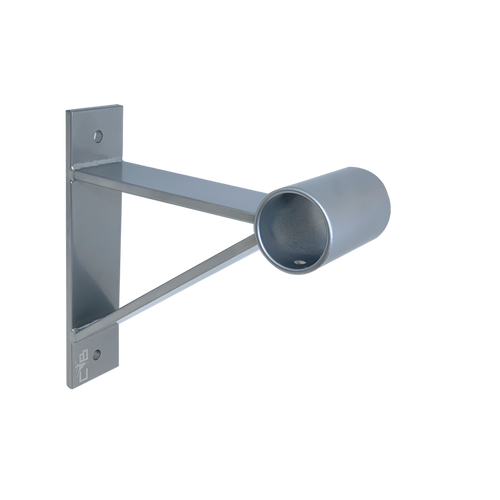
An ADA-compliant ballet barre for rehabilitation should mount between 33 and 36 inches from the floor (ADA grab bar height range), support a minimum 250-pound lateral load per bracket, and run at least 60 inches (5 feet) along the treatment wall. Solid hardwood with heavy-duty steel brackets is the correct specification.
Physical therapy clinics, adaptive fitness centers, and rehab hospitals are among the most demanding applications for a barre system. Patients rely on the rail for weight-bearing support — not just light steadying. The specification has to meet ADA guidelines while also looking and feeling like a professional installation.
ADA Requirements That Apply to Rehab Barres
ADA guidelines for grab bars (which apply to any assistive rail used for weight-bearing support) specify the following:
- Height: 33–36 inches above the finished floor for side grab bars. Many PT clinics specify 34–35 inches as the universal compromise for mixed patient populations.
- Diameter: 1.25 to 2 inches in diameter. Custom Barres hardwood rails typically run 1.5–1.75 inches in diameter, within this range.
- Clearance: 1.5 inches minimum between the rail and the wall. Standard bracket spacing provides this clearance.
- Load capacity: ADA requires grab bars to support a 250-pound force in any direction. Specify heavy-duty commercial brackets, not standard studio hardware.
- Mounting: Bars must be attached to structural elements — blocking between studs is required. Surface-mounted toggle anchors do not meet ADA structural requirements.
Dance Barre vs. ADA Grab Bar: What Is the Difference?
A standard ballet barre is not rated as a grab bar in the ADA sense — it is designed for light balance support during dance training. For rehabilitation use, you need to specify the barre as a structural rail:
- Request heavy-duty bracket hardware (rated for 250-lb+ lateral load).
- Require structural wall blocking — document this in the construction scope.
- Mount at ADA grab bar height (33–36 inches), not standard dance height (38–42 inches).
- Specify a non-slip surface finish on the rail — natural hardwood with a matte finish is preferred over high-gloss finishes.
- For wet or high-humidity spaces (hydrotherapy, aquatic PT), specify corrosion-resistant stainless steel brackets.
How Rehab Settings Use the Barre
- Gait training: Patients walk along the barre run while practicing weight shifting and controlled ambulation. Minimum run of 8–12 feet for gait work.
- Standing balance: Patients stabilize at the barre during balance drills. Single-point loading requires heavy-duty bracket anchoring.
- Lower extremity exercises: Leg lifts, circles, and range-of-motion work performed at the barre. Side loading is common.
- Adaptive fitness classes: Group exercise for patients in mobility recovery. Multiple participants means the barre must handle simultaneous multi-point loading.
Sizing a Rehab Barre System
- Individual treatment rooms: 6–8 feet of barre along one wall. Mount at 34–36 inches for versatility.
- Group therapy rooms: 16–30 linear feet across two or three walls. A double barre (33" and 38") serves wheelchair-adjacent patients and ambulatory patients simultaneously.
- Aquatic or hydrotherapy suites: stainless steel brackets required; mount height at 33–35 inches.
- For children's rehab: add a second lower rail at 24–28 inches to serve pediatric patients.
Specifying for Healthcare and Hospital Projects
- Include the barre specification in the construction documents alongside grab bar and handrail requirements.
- Note required load capacity per bracket in the spec sheet.
- Coordinate with infection control guidelines — specify finishes that can be wiped down with hospital-grade disinfectants without degrading.
- For new construction or major renovation, get the backing installation inspected before drywall is hung.
- Request a written load rating from the manufacturer for inclusion in the project file.
Next Steps
Custom Barres can provide specification documentation including load ratings, mounting requirements, and product datasheets for inclusion in healthcare construction files.
- Browse wall mounted, floor mounted, and portable options at Custom Barres.
- Get an instant price estimate with the quote tool — enter your wall length, mount type, and finish.
- Architects and designers: access CAD blocks, finish samples, and spec support through the Architect Portal.
Frequently Asked Questions
Does a ballet barre meet ADA grab bar requirements?
A standard ballet barre does not automatically meet ADA grab bar requirements. For rehab and PT use, you must specify heavy-duty brackets rated for 250-lb load, mount at ADA height (33–36 inches), and require structural wall blocking. Contact Custom Barres to confirm the specification.
What height should a rehab ballet barre be?
For rehabilitation and physical therapy use, mount the barre at 33–36 inches above the finished floor, consistent with ADA grab bar height guidelines.
Can a ballet barre be used for gait training?
Yes. An 8–12 foot horizontal barre run at 34–36 inches is a common gait training tool in physical therapy. The barre must be structurally mounted to handle weight-bearing loads.
What bracket is needed for a rehab barre?
Specify heavy-duty commercial brackets rated for 250-pound lateral load, anchored to structural blocking between wall studs. Standard studio brackets are not sufficient for weight-bearing patient use.